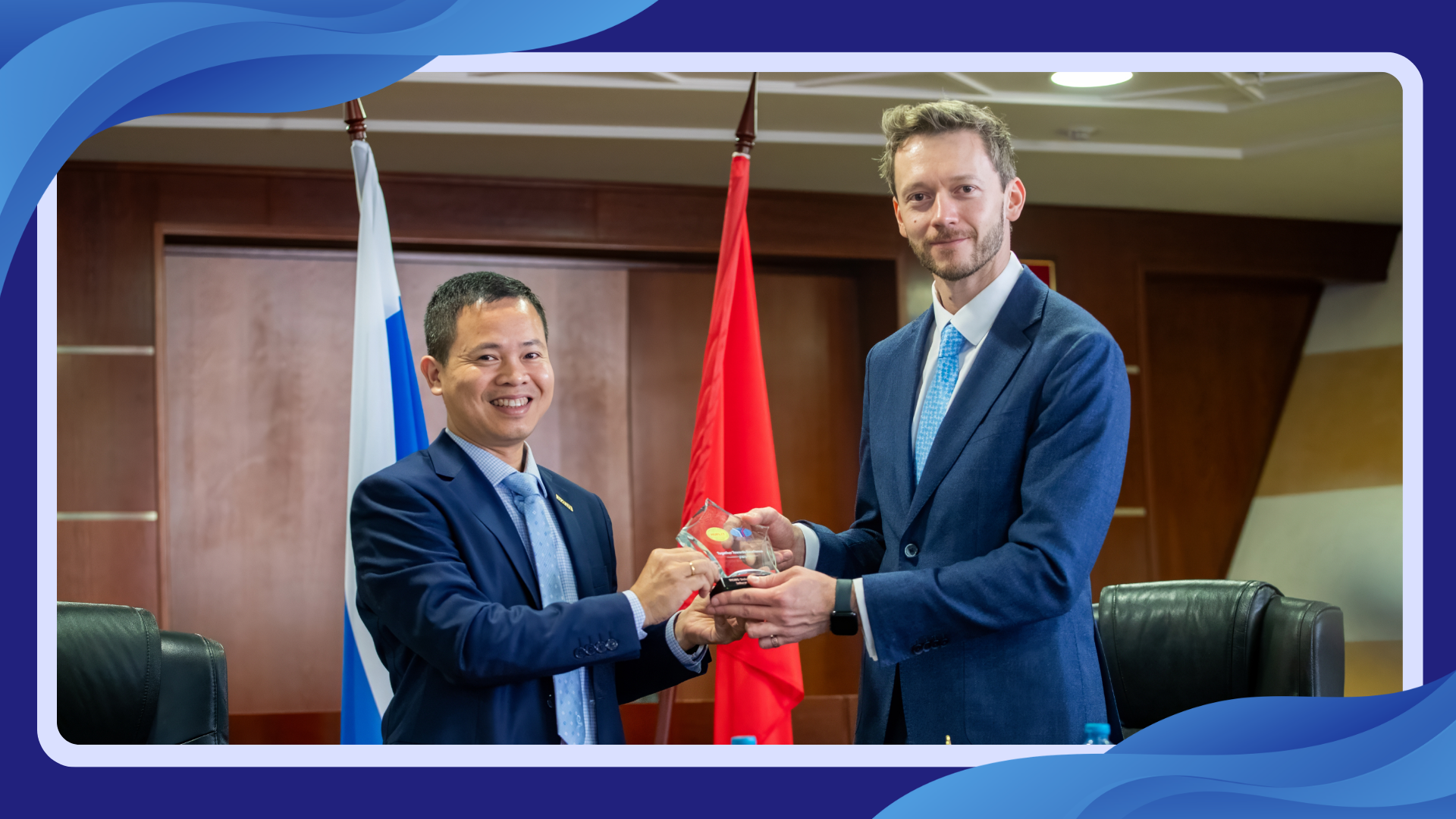
In its continued efforts to promote the internationalization of education and the application of technology in teaching—particularly in language education—Ho Chi Minh City University of Foreign Languages – Information Technology (HUFLIT) has officially signed a memorandum of understanding (MOU) with the Moscow State Institute of International Relations (MGIMO), one of Russia’s most prestigious universities.
The agreement marks an important step in expanding academic collaboration and strengthening international partnerships between the two institutions.
A partnership initiated through high-level academic dialogue
The cooperation between HUFLIT and MGIMO began in November 2024, when Dr. Nguyen Anh Tuan, Rector of HUFLIT, conducted his first working visit to MGIMO, laying the foundation for collaboration between the two universities.
In March 2025, the proposed partnership between MGIMO and HUFLIT was officially approved by the Ministry of Science and Higher Education of the Russian Federation and the Ministry of Foreign Affairs of the Russian Federation, creating a formal framework to advance bilateral academic cooperation.
Earlier, in April 2024, HUFLIT and MGIMO jointly held a bilateral discussion session during the 10th “Vietnam Day at MGIMO” under the theme “Prospects for Vietnam–Russia cooperation in science and technology”, marking an important milestone in the academic engagement between the two institutions.
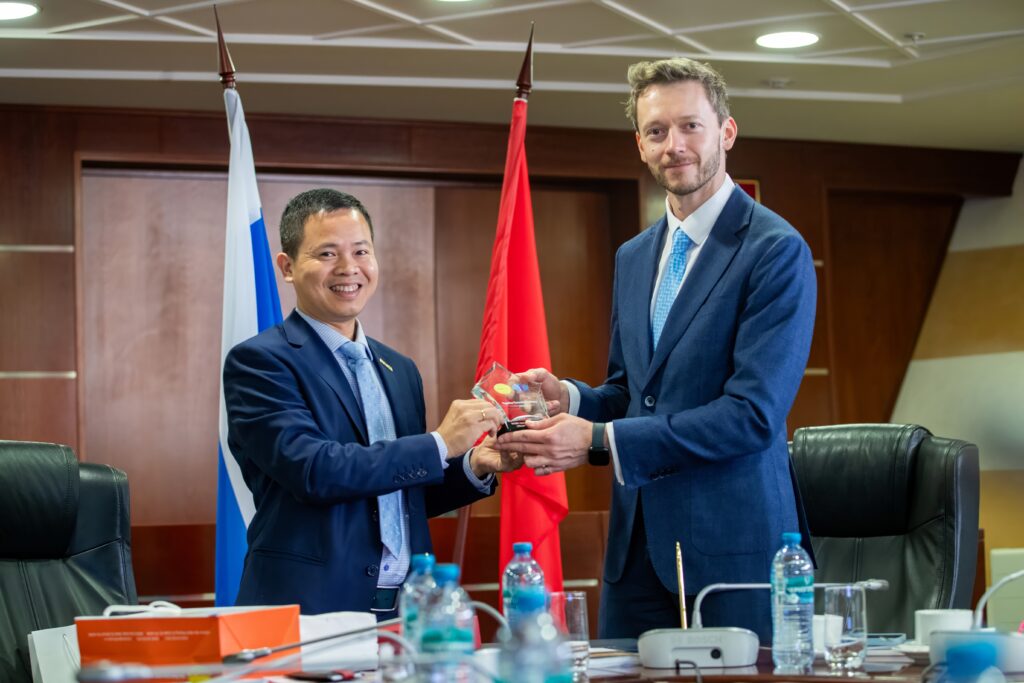
Continuing this momentum, on May 26, 2025, Associate Professor Nguyen Ngoc Vu, Vice Rector of HUFLIT and Director of the Institute for Training and Applied Research, visited MGIMO for an official working session. During the visit, he and Dr. Andrey Baykov, Vice Rector for Research at MGIMO, signed the memorandum of understanding, formally establishing a comprehensive academic partnership between the two universities.
Expanding cooperation in language education, AI, and applied research
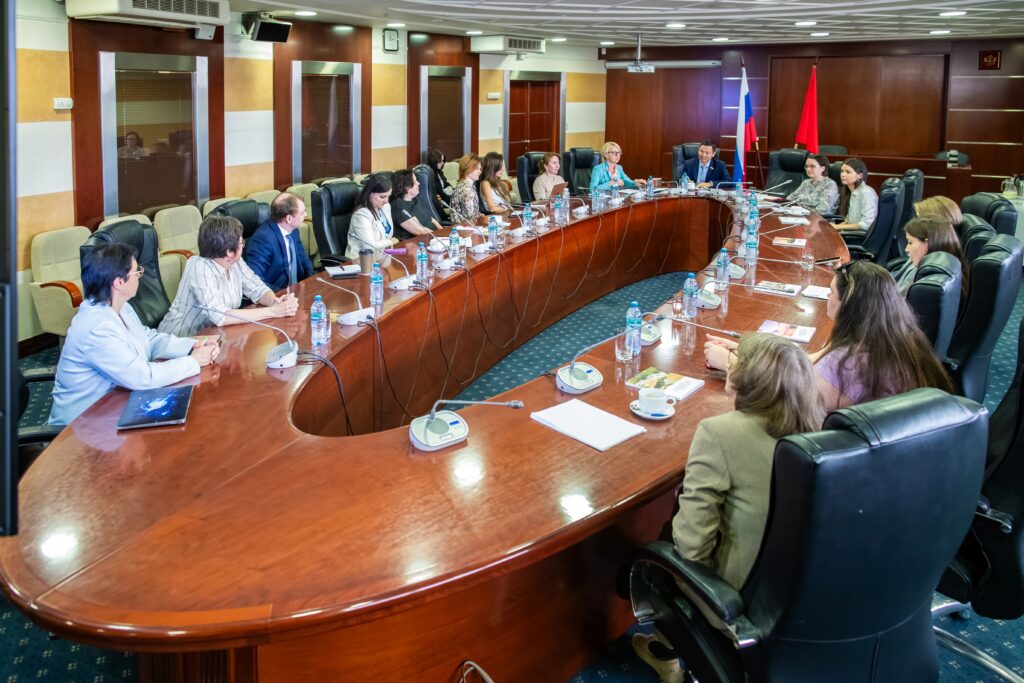
The meeting was attended by several leading scholars and experts from MGIMO, including Dr. Ekaterina Koldunova, Director of the ASEAN Centre, Dr. Marina Chigasheva, Head of the Language Training Department, as well as faculty members and researchers from the Neurolinguistics research group.
During the discussions, both institutions shared their academic strengths and teaching approaches, particularly the integration of advanced technologies into language education. Associate Professor Nguyen Ngoc Vu also introduced HUFLIT’s recent initiatives in applying artificial intelligence (AI) to teaching and learning, and explored opportunities for research collaboration with MGIMO scholars specializing in neurolinguistics.
As part of the visit, the HUFLIT delegation also toured MGIMO’s Neuromarketing Laboratory and the ASEAN Centre, two notable research units focusing on technology and regional studies.
The MOU: opening opportunities for joint academic programs and research
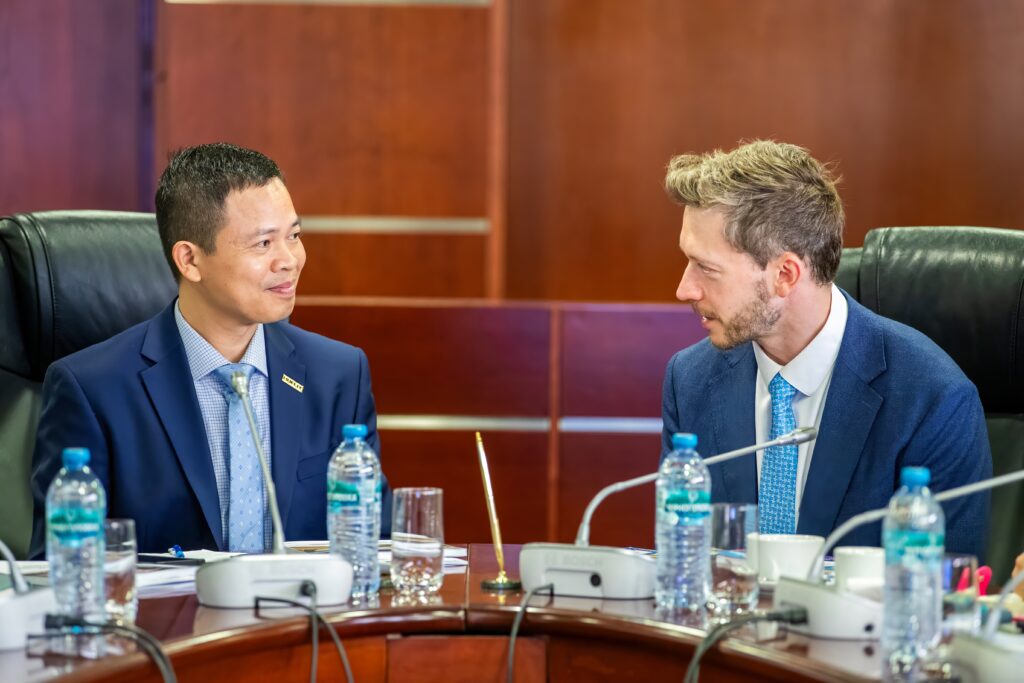
The memorandum of understanding between HUFLIT and MGIMO establishes a foundation for long-term cooperation in education and research. Under the agreement, both institutions will promote student and faculty exchanges, credit recognition, joint academic programs, and the sharing of teaching materials and pedagogical practices.
In addition, HUFLIT and MGIMO plan to collaborate in organizing international academic conferences and developing research projects that integrate technology into education and language studies, contributing to sustainable academic connections between the two universities.
MGIMO – a globally recognized academic partner
MGIMO (Moscow State Institute of International Relations) is a university under the Ministry of Foreign Affairs of the Russian Federation and is widely recognized for educating leading diplomats, policymakers, and international experts.
The university currently teaches 55 foreign languages, including 33 Eastern languages, a record recognized by Guinness World Records.
Partnership with MGIMO represents a strategic milestone in enhancing the quality of language education and expanding HUFLIT’s global academic network. The collaboration is particularly meaningful for the Faculty of International Relations and Communications, while also creating opportunities for other faculties to develop joint academic programs with one of the world’s leading universities.
Internationalization of education – a competitive advantage for students
The cooperation agreement with MGIMO once again demonstrates HUFLIT’s commitment to international integration in higher education. The university continues to pursue its internationalization strategy by developing high-quality programs delivered in foreign languages, integrating advanced technologies into teaching, and strengthening partnerships with leading universities worldwide.
Through these initiatives, HUFLIT students will have greater opportunities to access international learning environments, participate in academic exchanges, and engage with advanced education systems. Such experiences help equip students with the knowledge, skills, and global perspectives needed to succeed in the international labor market and become confident global citizens.